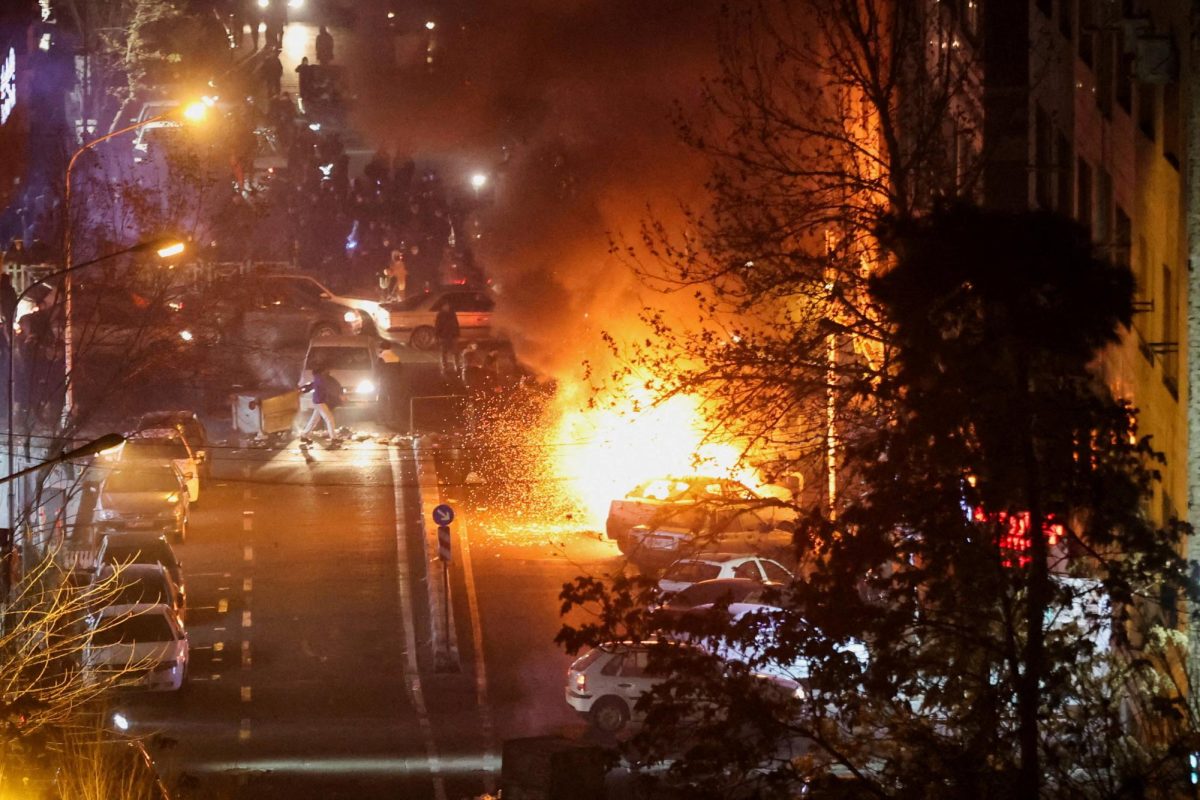
In January 2026, escalating tensions in Tehran, Iran, saw Iranian security forces intensify operations against protesters amid rising unrest and global scrutiny following economic collapse, fuel shortages, and anger at the regime. Reports of overnight raids, communication blackouts, and clashes near key government and military sites signaled a volatile crisis reverberating beyond Iran, sharply affecting Iranian-American families in Arizona with relatives still in the country.
Tehran residents reported explosions and gunfire as security forces tried to regain control after days of protest. Social media videos, though quickly removed due to internet restrictions, showed armored vehicles and heavily armed units in central Tehran. Human rights organizations warned of mass arrests and force against civilians. Exact casualty numbers remain unclear.
In a televised address, Islamic Revolutionary Guard Corps leaders promised “decisive consequences” for challenges to state authority. Meanwhile, Iran’s Supreme National Security Council ordered stricter security measures, including new travel and communication restrictions in major cities, to combat rising protests and citizen unrest.
As events unfolded in Tehran, Arizona’s growing Iranian-American community watched with anxiety. For them, the unfolding crisis is not just geopolitical but deeply personal. Dr. Arta Khakpour, a history teacher at Phoenix Country Day School, shared, “I have a personal and academic interest in Iran. That’s where my family’s from, and I studied Iran in undergrad and grad school.”
Arizona’s Iranian diaspora includes first-generation immigrants, U.S.-born children of Iranian parents, students, professionals, and refugees who fled earlier waves of repression. Despite building lives in the United States, many maintain close ties to Iran that leave them uniquely vulnerable to the country’s present instability.
“I’m always hopeful Iran will be a free society one day. I think the emotion that my family and I always go through at moments like this is a deep and profound sense of survivor’s guilt because I was born in the U.S.,” Dr. Khakpour said.
Dr. Khakpour’s parents left Iran in 1980, shortly after the Islamic Revolution. He finds the contrast in livelihoods a painful reality to witness. “At times like this, I see what could have been if we’d stayed there. It’s tough knowing 90 million people, like my family, live under deprivation,” he said. “It’s hard knowing I’ve had a comfortable life while others suffer. How do you ever thank those who’ve resisted the regime for 47 years? I have no idea.”
The escalation in Iran has restarted debate within the Iranian-American community about foreign involvement. Some support international intervention, while others are cautious. Dr. Khakpour doubts that intervention can focus solely on human rights, acknowledging that an issue of that complexity would open the door to never-ending international involvement.
“Obviously, part of me would be happy if, somehow, you could snap your fingers for the U.S. to intervene so that the Iranian regime fell smoothly and there was a democracy there, but I don’t blame the U.S., and I don’t think it’s the U.S.’s responsibility to make that happen. If the U.S. intervened everywhere for human rights, it would do so constantly,” Dr. Khakpour said.
Internationally, the United Nations urged Iranian authorities to restore internet access and allow independent monitoring, warning that continued repression could deepen instability. Tehran dismissed criticism, framing the unrest as an internal matter and accusing Western governments of interference.
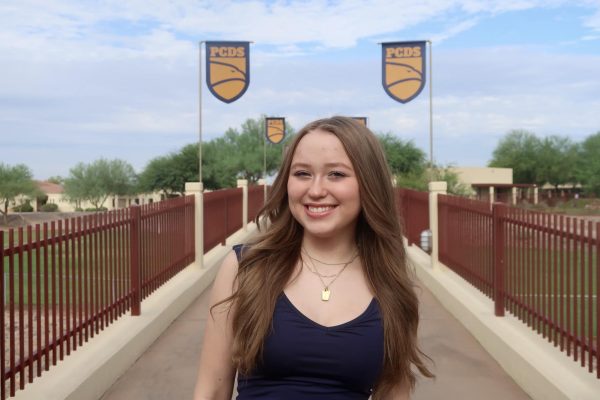
For students in Arizona schools, the crisis is part of daily life. Iranian-American student and PCDS junior Tara Ghafouri describes feeling overwhelmed by the emotional weight of watching their country of heritage unravel from afar.
Ghafouri described the emotional complexity of watching events unfold from the U.S. while loved ones remain in Iran. “It’s complicated. On one hand, my family is safe and has opportunities we couldn’t have had in Iran, but there’s always a sense of guilt that we’re far away while people we love are still living under fear and oppression,” she said.
She emphasized that the violence faced by young protesters in Iran feels deeply personal. “It’s hard because I see all the youth protesting and risking their lives, and to think that that could have been my sister or me just breaks me,” Ghafouri said. “Simply put, despite all of the trauma my parents went through to come to America, they were the lucky ones. Now I carry a responsibility to use my voice for those who can’t.”
As January continues, the situation in Iran remains fluid. Protests persist despite the crackdown, and the government shows no sign of loosening its grip. For Iranian-Americans in Arizona, the uncertainty is exhausting. Each update from Tehran carries the possibility of relief—or devastating news.
Decisions in Tehran shape Iran’s fate, but their repercussions ripple across borders. In Arizona, this crisis is experienced through silence on the phone, restless nights, and the persistent anxiety that history is repeating, forcing families once more to witness loved ones bear the costs of political turmoil from afar.