On Jan. 3, 2026, U.S. forces apprehended Venezuelan President Nicolás Maduro and his wife, Cilia Flores, in Caracas and transported them to New York to face U.S. criminal charges. This marked a turning point in U.S.-Venezuelan relations, opening the door to both new relationships and potential conflicts. That afternoon, President Donald Trump announced on Truth Social that the United States would temporarily administer Venezuela, oversee its oil reserves, and direct a new political transition—demonstrating an assertive redefinition of U.S. policy objectives in Venezuela.
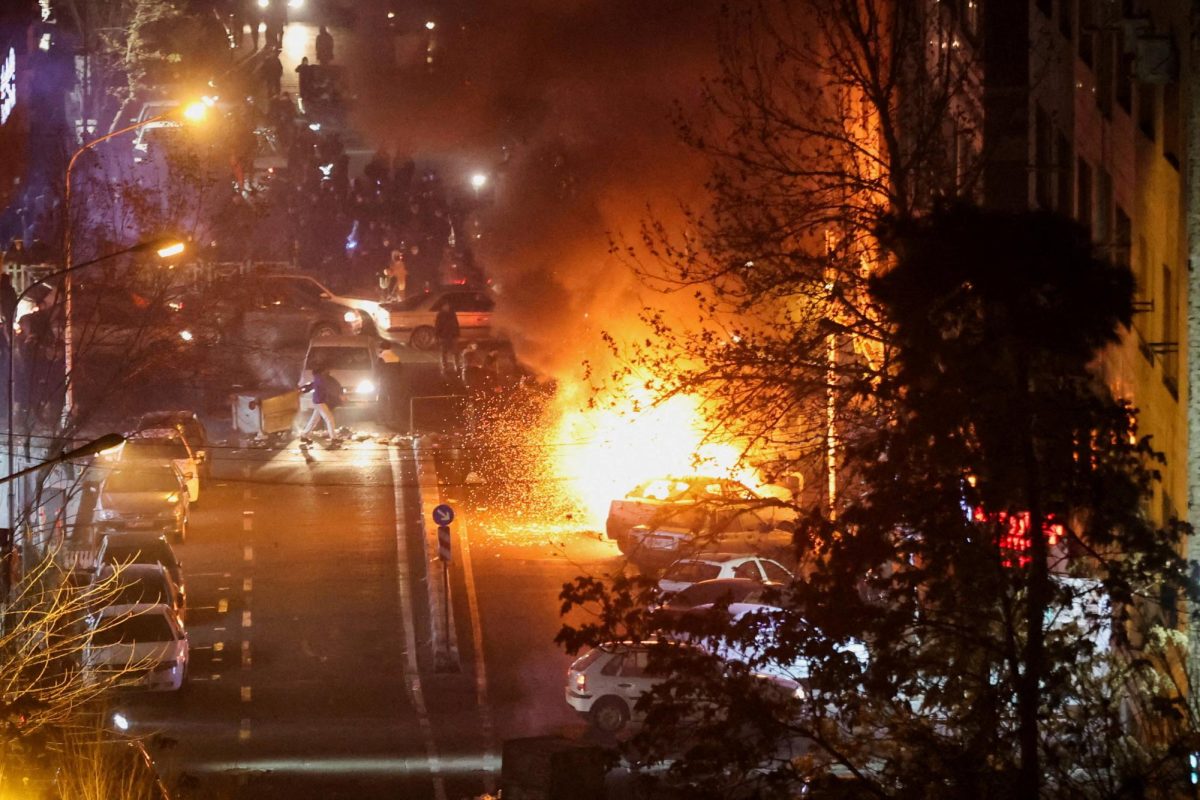
On the early morning of Jan. 3, Caracas residents reported hearing multiple explosions and low-flying aircraft as the United States launched a large-scale operation against Venezuelan military bases and key sites in the capital, including La Carlota Air Base and Fuerte Tiuna. Smoke and power outages followed in parts of the city as the strikes occurred under the cover of darkness. At around 2 a.m. local time, the U.S. military captured Maduro from his home in Caracas. Later that day, President Trump confirmed Maduro and Flores were in custody and that the U.S. would oversee Venezuela’s transition of power. In his announcement, Trump explained, “We have a group of people running [Venezuela] until such a time it can be put back on track, make a lot of money for [Venezuelans] … give people a great way of life, and also [reimburse the] people in our country who were forced out of Venezuela.” The White House, in turn, outlined how the mission had been months in planning and aimed to hold Maduro’s government accountable for drug trafficking offenses in a series of presidential announcements and press events in the days following the capture.
At a news conference on Jan. 3 at Mar-a-Lago in Palm Beach, Florida, Trump reported that forces rehearsed and executed the operation at night to minimize risk. Federal officials from the U.S. Department of Justice and the U.S. Attorney’s Office for the Southern District of New York confirmed Maduro and Flores were transported to New York. Both pleaded not guilty to narcotics-related charges in federal court.
U.S. officials, including Secretary of State Marco Rubio and the Chairman of the Joint Chiefs of Staff Dan Caine, characterized the operation as a strike-and-capture mission, which in turn elicited strong international reactions and debate over sovereignty and legitimacy. Venezuela’s acting president, Delcy Rodríguez, condemned the action as a violation of national sovereignty and declared a week of mourning on Jan. 7 for Venezuelan military personnel killed during the operation, with some sources estimating casualties to include numerous Venezuelan and allied security forces. Cuba also reported the deaths of dozens of its personnel stationed in Venezuela, further intensifying the controversy.
Rodríguez, a longstanding ally of Maduro, was sworn in following his removal on Jan. 5, 2026, in Caracas, Venezuela, at a ceremony before the National Assembly, where her brother Jorge Rodríguez, the president of the legislature, administered the oath of office after Maduro was removed from power during the U.S. military operation. She rejected U.S. authority over Venezuelan affairs and aimed to maintain continuity in domestic governance. The country’s highest court recognized her as head of the executive branch. Again, Rodríguez denounced the U.S. military action as illegitimate and called for respect for Venezuela’s constitutional order.
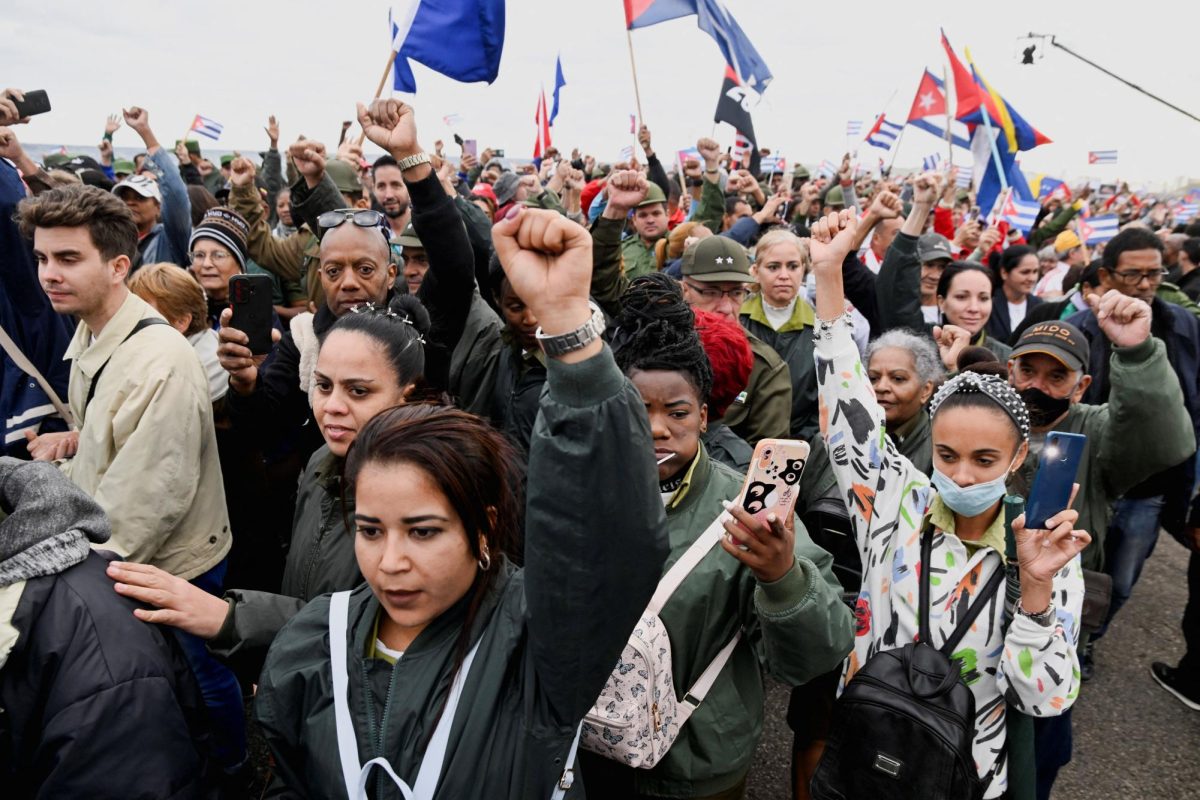
As news spread that Maduro had been captured and flown out of the country, many Venezuelans, as well as people around the world, reacted with a mix of shock, fear, confusion, and uncertainty about the future. In the following days, Maduro supporters took to the streets of Caracas to condemn the U.S. intervention and demand his release. Meanwhile, some Venezuelans and international observers expressed relief or cautious optimism about the prospect of ending Maduro’s nearly 14-year rule, which critics blame for economic collapse, hyperinflation, and severe shortages of basic goods and necessities.
The United States has consistently accused Maduro and his associates of involvement in drug trafficking and corruption. Building on these accusations, in 2025, the U.S. government increased the reward for information leading to Maduro’s arrest and filed indictments related to narcotics and associated offenses to $50 million—the most significant reward ever offered for a foreign head of state. Since then, senior U.S. officials at the White House and the Department of Energy have also identified Venezuela’s oil wealth as a factor influencing regional stability and energy markets. Accordingly, Trump announced that the United States would begin selling Venezuelan crude oil to other countries after Venezuela promised to give up to fifty million barrels of oil to the U.S.
Meanwhile, Russia has rejected U.S. assertions of control over Venezuelan oil assets shortly after the capture. It has maintained that Russian oil companies operating in Venezuela, including Rosneft and Roszarubezhneft, will continue to operate under existing agreements. Additionally, the Russian Foreign Ministry has called for Maduro’s release and advocated for diplomatic dialogue immediately following the U.S. military strikes in Venezuela and the reported capture. Russia continues to maintain strategic ties with Venezuela.
U.S. officials, including President Trump and Secretary Marco Rubio, have positioned the operation as central to a new strategy: combating narcotics trafficking, countering foreign influence in Venezuela, and fostering a democratic transition. Yet the intervention, undertaken without a formal declaration of war, has drawn legal and diplomatic criticism, particularly from United Nations officials, including António Guterres, the UN Secretary-General’s spokesperson. Alongside military action, the U.S. is applying economic pressure through sanctions on Petróleos de Venezuela S.A. (PDVSA) and selective licensing for American energy firms, clearly aiming to leverage Venezuela’s oil sector to influence political outcomes.
As of mid-January 2026, Venezuela remains politically unstable. Rodríguez’s interim government seeks to maintain order amid contested authority. At the same time, opposition leaders, like Nobel Peace Prize laureate María Corina Machado, and civil society groups call for comprehensive reforms and free elections as Venezuela adjusts to its new circumstances. The United States actively supports a democratic transition away from Maduro’s authoritarian regime. Still, critics—including the United Nations, the Organization of American States, and regional governments in Mexico, Brazil, and Chile—challenge both the legality and the strategic consequences of the U.S. intervention, reflecting the central debate generated by the crisis.
As Venezuela’s political future remains unresolved, this case starkly illustrates how military intervention, legal authority, and geopolitical objectives converge, directly challenging traditional boundaries in global diplomacy and intensifying debates about power, legitimacy, and accountability in the modern world.