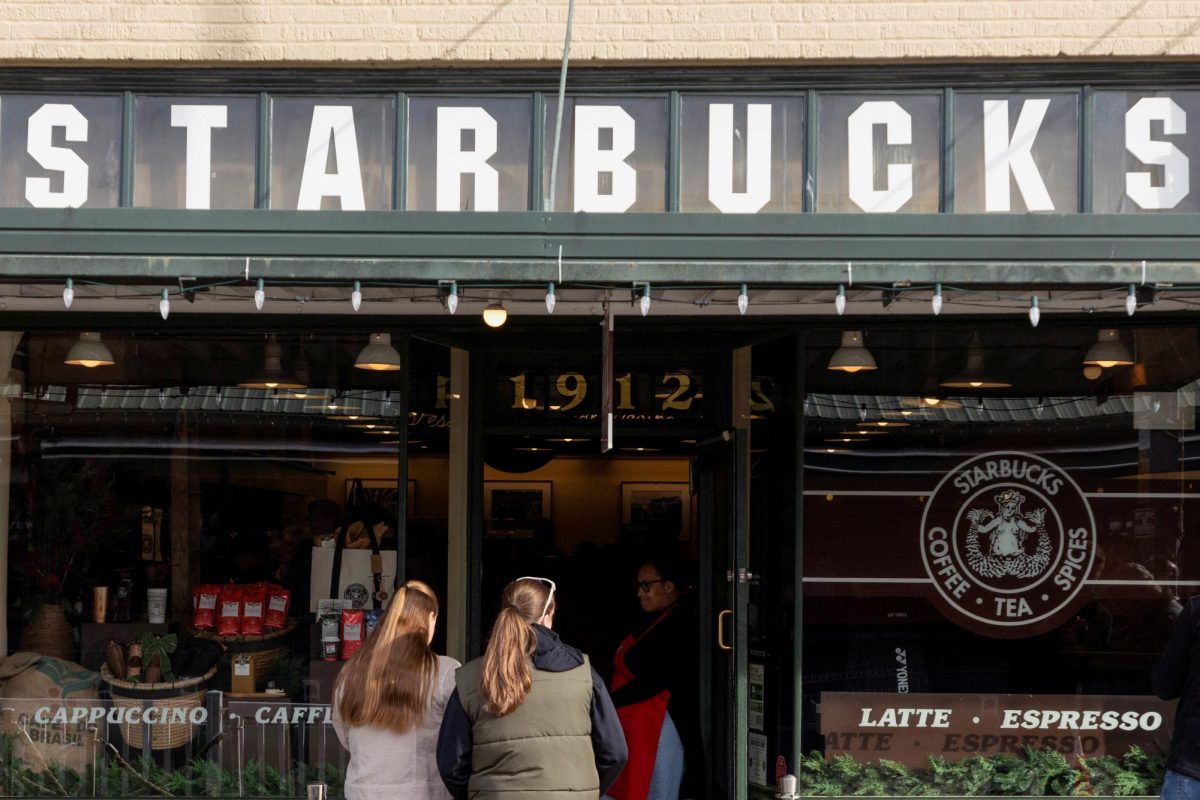
In the predawn hours of Nov. 6, customers began lining up outside Starbucks stores across the United States. This time, they were not waiting for coffee. Instead, they hoped to secure one of the company’s newest holiday merchandise items: a 20-ounce glass cold cup shaped like a small winter bear.
The cup, known as the “Bearista,” retailed for $29.95 and arrived with little advance advertising. But within minutes of opening, many stores had already sold out their entire supply (often limited to one or two cups per location), igniting a nationwide scramble for a novelty item that few expected would become the season’s most coveted collectible.
The Bearista features a rounded glass silhouette resembling a bundled-up bear, complete with a beanie-style lid, a striped straw, and a molded miniature Starbucks drink held between its paws. Photos and videos of the cup spread rapidly across TikTok and Instagram, where shoppers documented “Bearista hunts,” empty shelves, and employees apologizing for low stock. The design’s mix of cute charm and holiday nostalgia helped the cup surge past ordinary merchandise and into the realm of cultural obsession.
Word of the adorable new cup spread rapidly, the bear’s scarcity prompting a wave of frustration and impulsive buying. Customers reported driving to multiple Starbucks locations before school or work, only to find that each store had sold out within minutes. Some accused employees of purchasing cups before customers had the opportunity, while others filmed long lines outside shopping centers in hopes of finding a store with stray inventory. TikTok users began cataloguing the frenzy, attracting millions of views in a matter of hours.
Demand poured into resale markets very quickly. Listings for Bearista cups appeared on platforms like eBay, Depop, and Facebook Marketplace for several hundred dollars, with some sellers asking for more than $1,000. Bidding wars broke out, with resellers taking advantage of the opportunity to capitalize on one of the year’s biggest surprise trends.
The frenzy even inspired copycat products. Within days, retailers such as Walmart and ALDI began selling bear-shaped “dupe” cups (similar in design but significantly cheaper), with the swift turnaround reflecting the intensity of public interest.
Facing criticism that customers hadn’t had a fair chance to purchase the cup, Starbucks acknowledged the uproar and announced a second opportunity to acquire the coveted cup. On Dec. 8, the company added the Bearista cup as a prize in its annual “Starbucks for Life Merrython” online game for rewards members. Roughly 17,000 cups were distributed nationwide through early January, ensuring continued scarcity while offering a controlled way for customers to try their luck.
For Starbucks, the Bearista may ultimately be remembered less for its appearance than for the phenomenon surrounding it. The chaotic drop underscores the unpredictable power of viral trends, especially when social media amplifies both novelty and scarcity. It also reveals the growing influence of the “cute economy,” where charming, collectible designs resonate strongly with younger consumers.
Whether buyers were motivated by aesthetic appeal, online hype, or the lure of resale profits, the Bearista cup transformed a simple piece of merchandise into a holiday-season flashpoint. As far as 2025 trends go, few were as unexpected—or as fiercely pursued—as a glass bear built to hold cold brew.