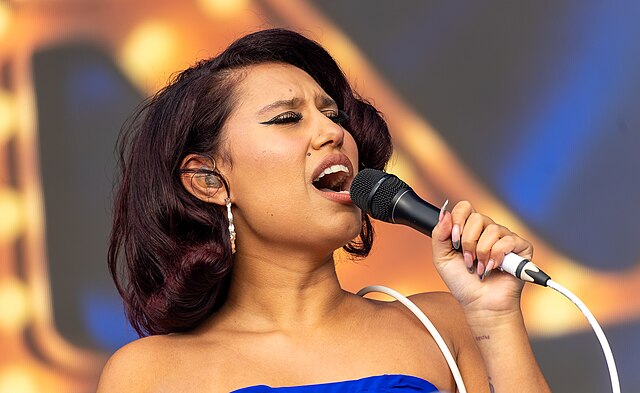
“Qué rico es el latino. Hoy se ve,” declares a man standing before towering fields of sugar cane. A bachata guitar riff cuts through the stadium air as Bad Bunny’s Super Bowl Halftime Show begins.
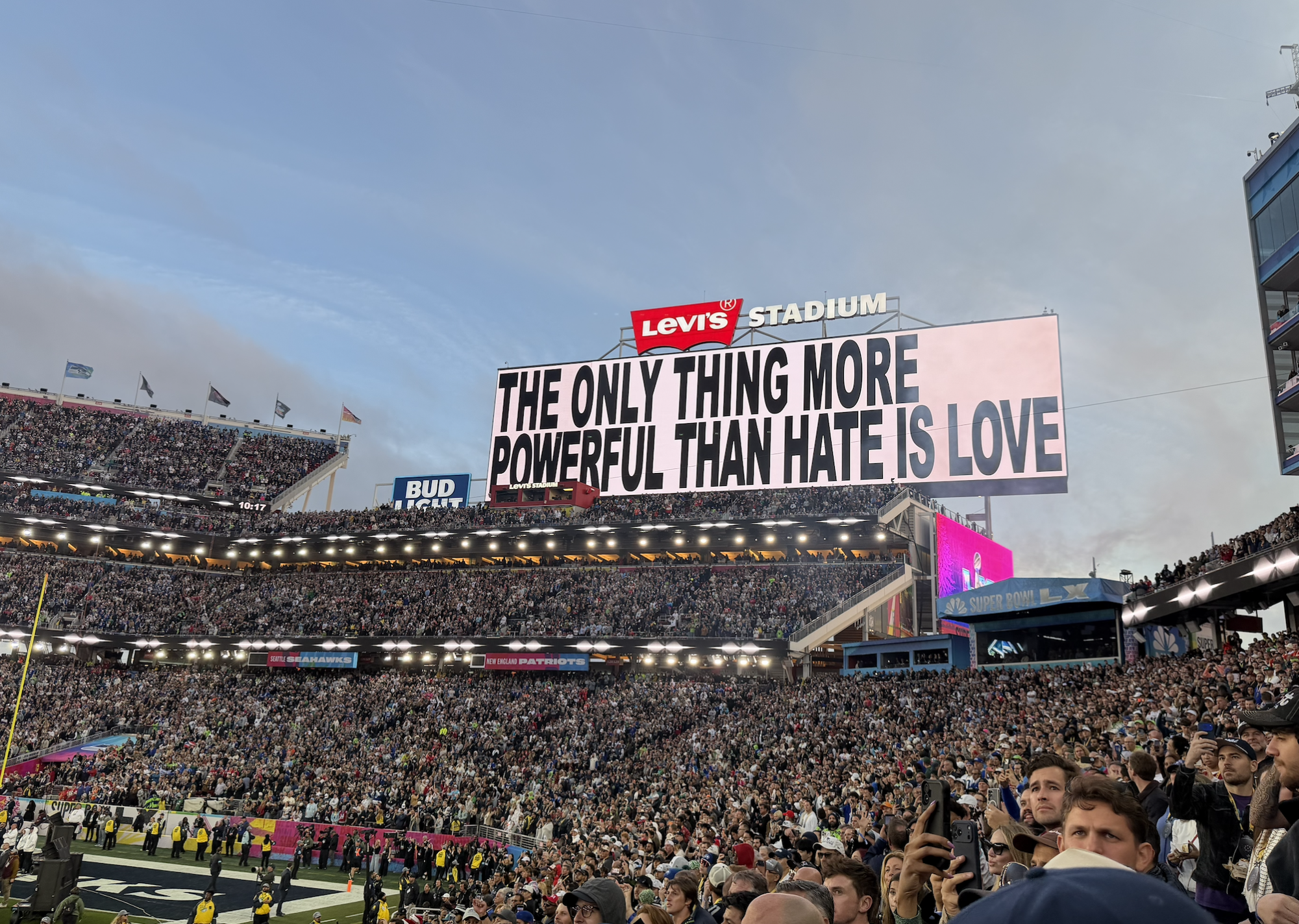
On Feb. 8, 2026, at Super Bowl LX in Levi’s Stadium in Santa Clara, California, Puerto Rican rapper Bad Bunny delivered a historic performance—the first Super Bowl Halftime Show performed entirely in Spanish. In just 13 minutes, he transformed the Super Bowl field into a celebration of Latino culture.
The show averaged 128.2 million views, becoming the fourth-most-watched halftime show in history, according to ESPN. However, for many students on the PCDS campus, the performance meant much more than entertainment; it was representation and education on one of the largest stages in the world.
The show began with Bad Bunny, football in hand, walking through winding fields of sugar cane, surrounded by workers, singing “Titi Me Pregunto.” On every corner of the fields, small details emerged.
Senior Elvia Hernandez took notice right away, sharing, “My favorite detail of [the halftime show] was the people working in the fields because that’s such a big part of Latin culture.”
The workers in the sugar cane fields, known as jíbaros, paid homage to Puerto Rico’s long history with sugar cane. First introduced in the 1500s by Spanish colonizers, sugar cane was the backbone of the island’s economy for centuries.
As the performance continued, the set transformed into a moving portrait of Latino life. Bad Bunny passed tíos in a heated dominoes game, a coco frío cart, and women getting their nails done. He ducked under a Puerto Rico-Mexico boxing match, representing the decades-long rivalry between the two; passed by a Villa’s Tacos cart, an actual business in LA; grabbed shaved ice from a piragua stand, manned by Victor Villa, the owner of Villa’s Tacos; and perused jewelry from a stand, purchasing a diamond ring.
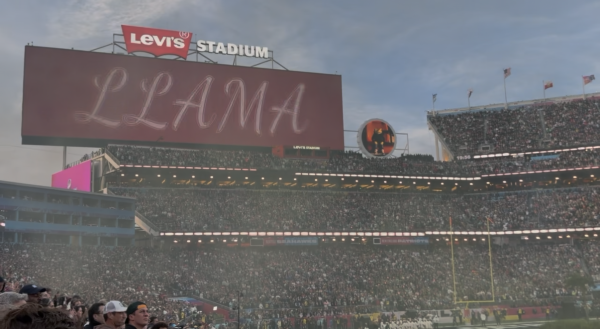
Throughout the performance, the jumbotron displayed the lyrics to each song, helping the primarily non-Spanish-speaking audience follow along. For sophomore Emerson Schultz, this experience was impactful. She explained, “I didn’t take Spanish in school. I never really had that exposure to Spanish culture before I moved here.” She shared that listening to the lyrics in Spanish felt like “an inside joke that [she wanted] to get in on.”
Soon, the ring Bad Bunny purchased earlier in the show was put to use for a real wedding on the field. After the officiant announced the couple as husband and wife, wedding guests moved aside, and Lady Gaga emerged with a traditional salsa band surrounding her. They performed the salsa version of “Die With a Smile,” transforming the halftime show into a lively wedding celebration.
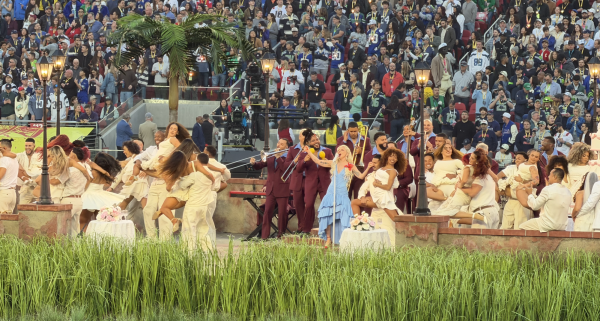
Junior Cole Bower enjoyed Lady Gaga’s performance. He noted that it was interesting to see someone who was not of Hispanic heritage perform a song to traditional instruments, “showing that people can all share the same stage together, and I like that message of, like, spreading unity,” he said.
Bad Bunny soon reappeared, taking Lady Gaga into his arms as they joined the wedding party, dancing to “BAILE INoLVIDABLE.” The camera bounced around the crowd—from a young girl dancing on her grandfather’s feet, to the wedding cake being cut, to a young child asleep across a row of chairs, and the newly married couple sharing their first dance—making viewers feel as though they were a part of the celebration.
Junior Ula Stratz said, “I feel like [the wedding] was so beautiful to watch.” She shared that, for a lot of people, “Their end goal and life is to be married and be happy,” and “[Bad Bunny] is able to make that happen for them.”
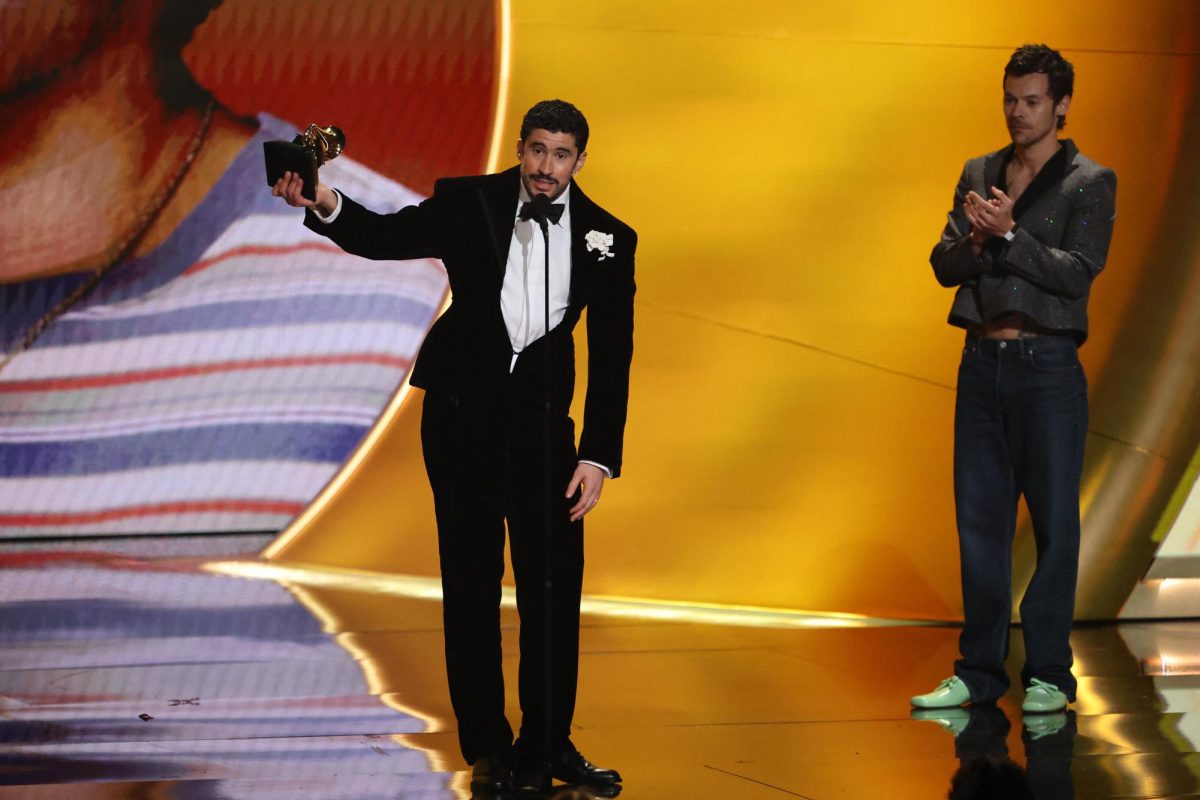
As the show transitioned from the wedding scene, the camera cut to a young boy watching the Grammy Awards with his parents. On the television screen, Bad Bunny accepted the award for Best Album for “DeBí TiRAR MáS FOToS,” becoming the first Spanish-language album to win the category.
In his acceptance speech, Bad Bunny delivered what would soon become viral lines, speaking out against immigration enforcement and affirming the humanity of Latinos, declaring, “The only thing more powerful than hate is love.”
Moments later, Bad Bunny ran out to the family watching him on the screen and handed the boy his real Grammy.
That moment in particular stood out to sophomore Rosie Berber. “A lot of my family has been impacted by ICE,” Berber said. “Their workplaces got raided, or their schools got raided, or they just got deported. So it did hit close to home, especially recently.”
The camera soon returned to the sugar cane fields, where a guitarist sat among the stalks. The camera scanned the stalks, landing on Ricky Martin performing on a set modeled after the “DeBí TiRAR MáS FOToS” album cover, featuring two white plastic chairs placed in front of rows of plantain plants.
This moment stood out to Bower. “Ricky Martin was a cool part,” he said. “I liked how the album cover was set, and he started singing about Hawaii and comparing it to Puerto Rico.”
Martin performed the song “Lo Que Le Pasó a Hawaii,” one of Bad Bunny’s more political songs, which draws comparisons between Hawaii and Puerto Rico, critiquing the effects of mass tourism on the islands.
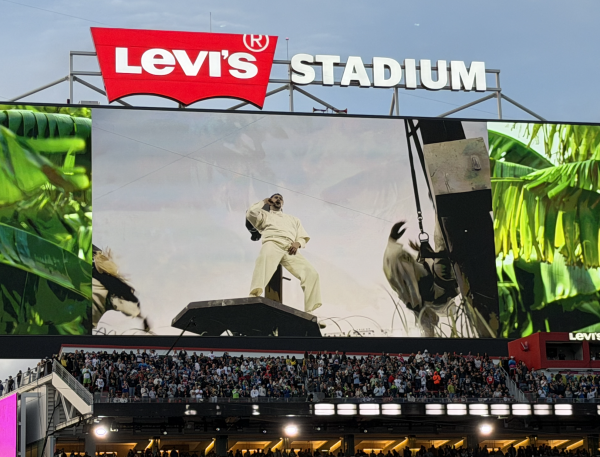
Soon after, sparks flew from power poles in the distance, as the song “El Apagón,” meaning “The Blackout,” began playing. Dancers dressed as workers climbed up and down power poles while sparks flew.
Bad Bunny climbed up to a platform, singing “El Apagón,” referencing Hurricane Maria’s severe impacts on power in Puerto Rico, which destroyed over 80% of the island’s power grid, leading to one of the longest blackouts in history.
Sophomore Ciara Crook said, “I really liked how he did the power outages in the show because it really highlighted a lot of the struggles that we go through.”
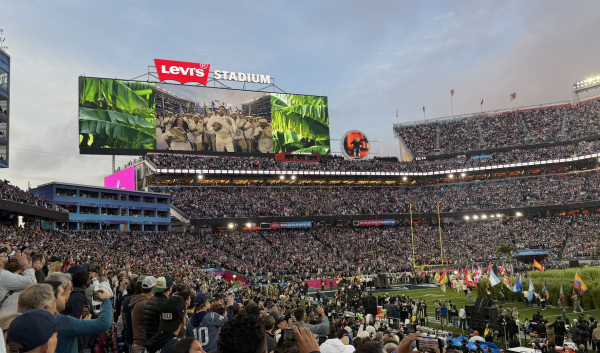
As the performance neared its end, people carrying Latin American flags ran onto the field, starting with the Puerto Rican and American flags. Then, Bad Bunny, football in hand, spoke his first English words of the show.
“God bless America,” he said, before continuing to name countries across Latin America. “Seguimos aqui,” he said. “We’re still here.” He turned his football over, which read “Together We Are America,” and threw the ball. Behind him, a screen displayed the message, “The only thing more powerful than hate is love.”
Sophomore Lauren Bryant said that this moment captured the message of the entire performance: “I think that was just a really good way to like sum up what he’s trying to stand for that even if there’s people who have a lot of negativity in their hearts about things like this, if you open up a little more and have are willing to see more than one perspective, then everything will be better.”
Overall, Schultz felt this performance encouraged viewers to look beyond their own perspectives. “I think we get so used to our own people who are similar to us, but when you just interact with people that are similar to us, we don’t grow, we don’t learn. And by interacting with those that we might feel uncomfortable with, or cultures that we might feel uncomfortable with. We learn infinitely more,” Schultz said.
The very first words spoken at the beginning of the performance, “Que rico es el latino. Hoy se ve,” translating to, “How amazing are Latinos. Today we’ll see,” shine through. For many viewers, the show’s representation did exactly that.
Junior Caden Huckelbridge said, “The thing that leads to hate and division is usually ignorance. That’s when people don’t see something like [the halftime show], and when you see it firsthand, you’re less likely to hate it.”